
Monumental textiles
Exploring the work of Sheila Hicks

I discovered the work of artist Sheila Hicks as a textile student at the Rhode Island School of Design. Her soft sculptures and fiber installations were proof of what I felt instinctively: textiles are monumental. In Hicks’s work, the yarns and threads I’d collected since childhood transcended the humble realm of hobby, and became an undeniable event, as worthy as bronze and marble. When I learned Hicks was showing new works at SF MOMA, I knew I would make my way across the country to see them.
“We are living in times that are very strange, where textiles have become our best friends. Textiles, blankets, sleeping bags, sacks, suitcases, all these things. This is a material that is more than just decorative, or more than just a medium. It’s a life-giving material, a life-sustaining, life-necessity material that we’re living with. What do we do with it? How do we share it? How do we make the most of it?” - Sheila Hicks: A Little Bit of a Lot of Things
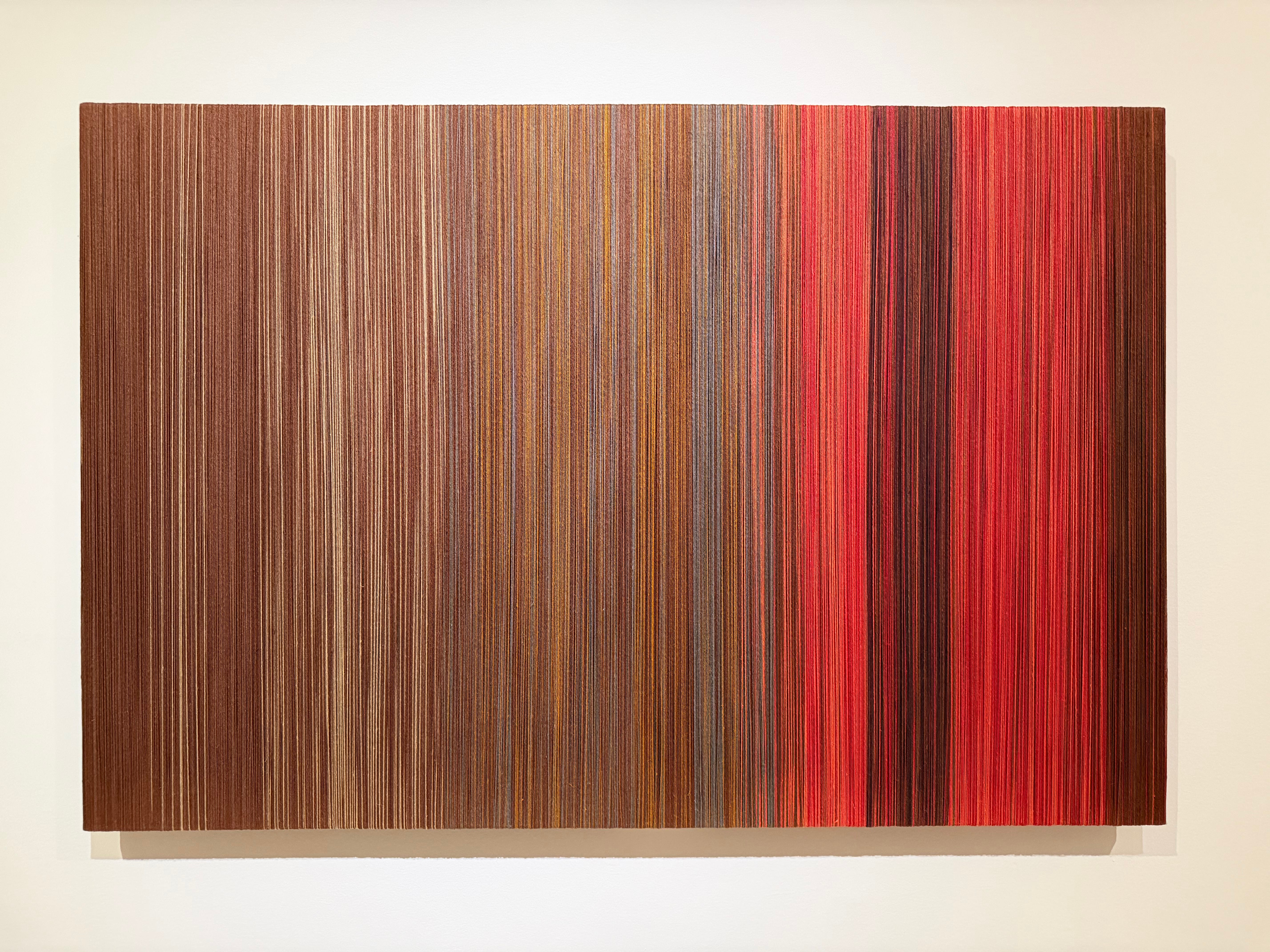
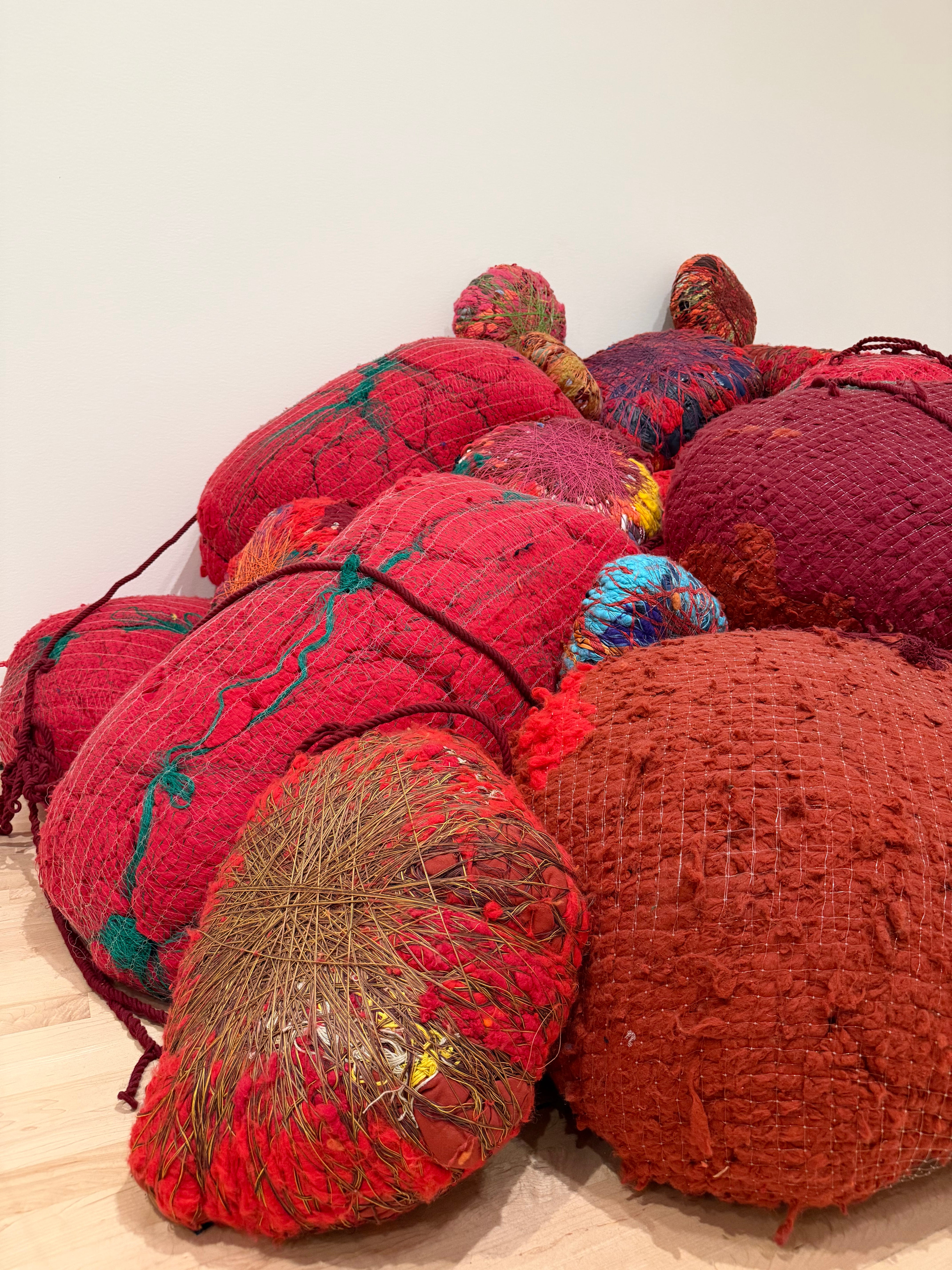
“New Work: Sheila Hicks” iterates on the artist’s dynamic approach to color, form and materiality. I arrived at the museum bleary-eyed from an early morning flight to San Francisco, and damp from the rain. The earthy hues and textures were a balm to my senses. Framed weavings were intimate topographies to lands unknown. Wrapped yarns shimmered in subtle gradients. Netted fiber bundles were a soft landing from the hard edges of the city streets.
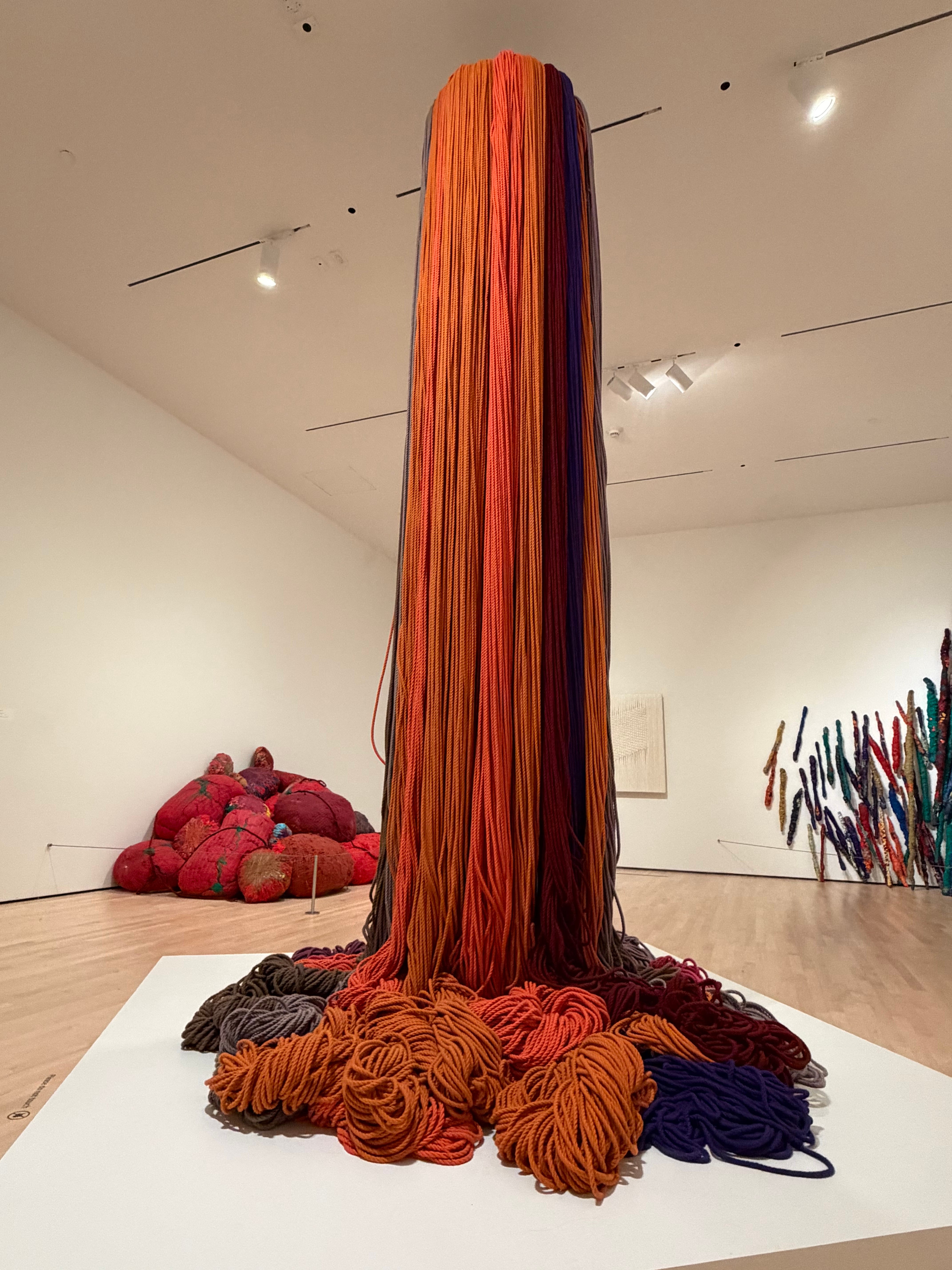
In the middle of the space, thick, twisted cords in autumnal hues hung from a towering armature, coiling in voluptuous knots at the base. This site-specific phare or lighthouse, is entitled Vers des Horizons Inconnus (Towards Unknown Horizons). The piece was originally shown at Art Basel in Paris in 2023 in the historic Place de l’Institut, where it was both dwarfed and enhanced by the surrounding architecture.
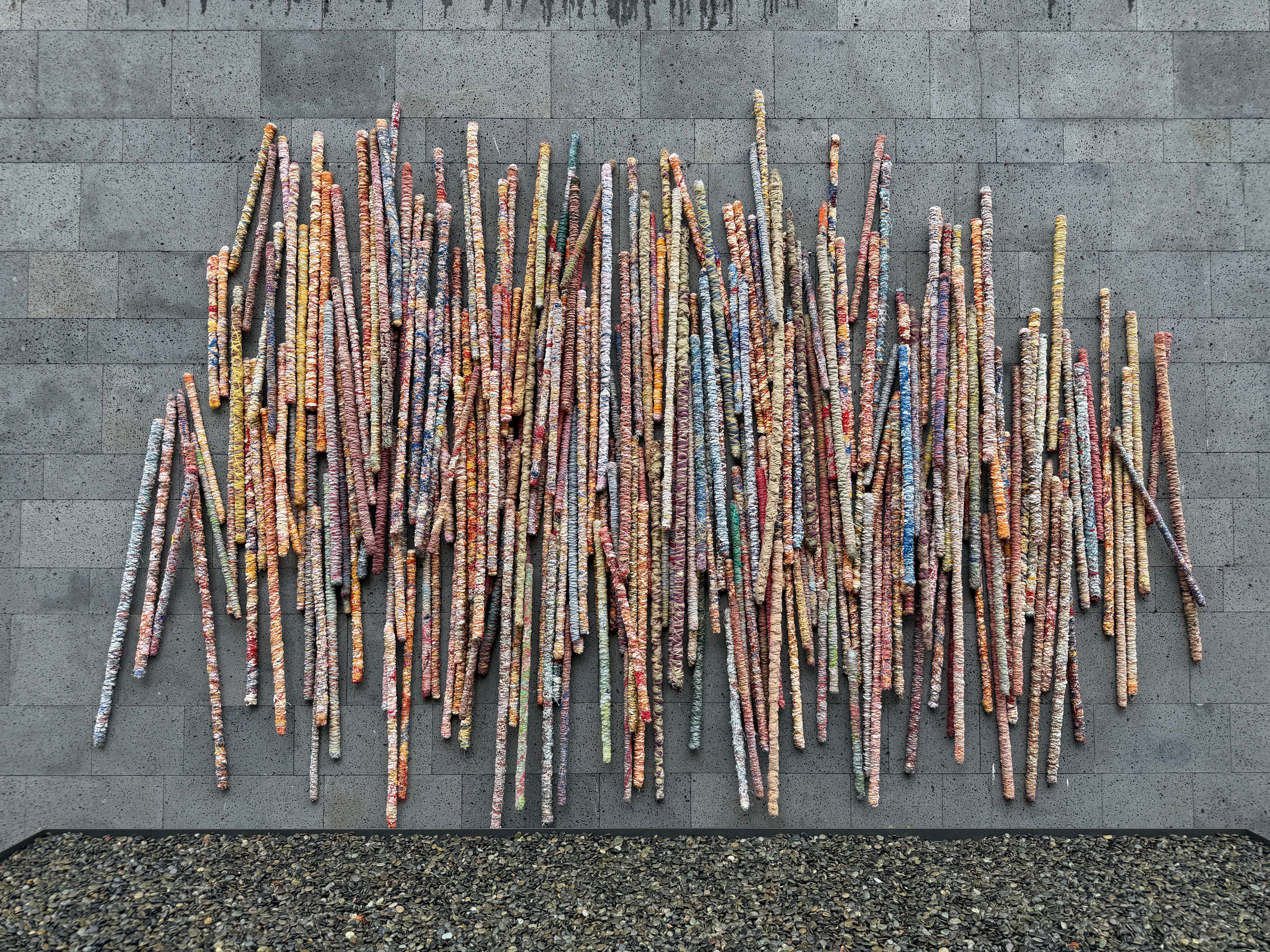
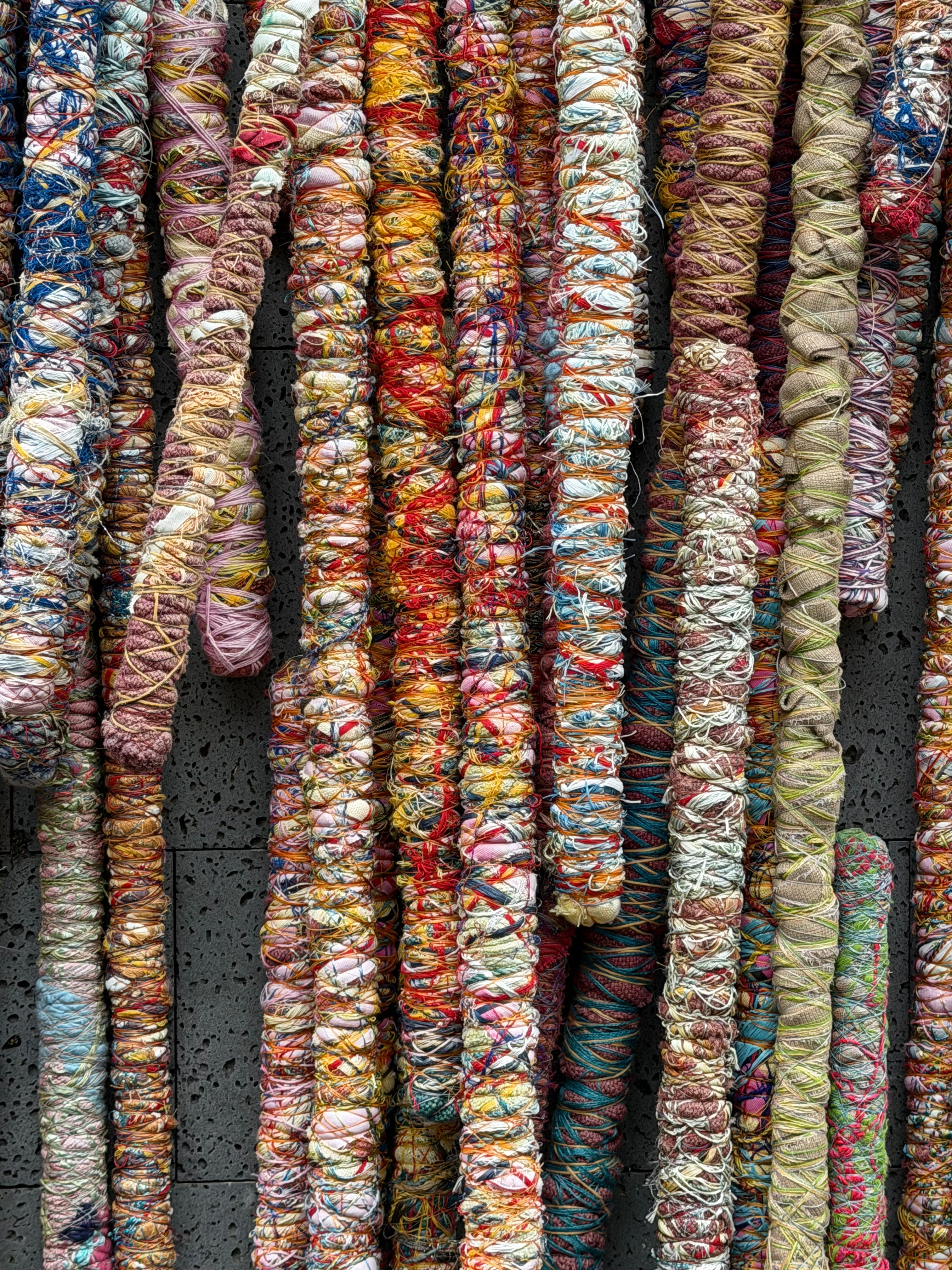
One of my favorite pieces was “Meditation, Concentration, Elation (Twirl and Swirl),” a museum commission in the sculpture garden. The rain-soaked colors and raw fibers of the wrapped bâtons were layered and tactile against the stone wall and gray sky.
“I twirl thousands of soft sinuous lines in all directions, allowing them to dance and misbehave as an ensemble. Textured voices meld and whirl. Patterns and shadows invite discovery.” - Sheila Hicks
Born in Hastings, Nebraska during the Great Depression, Hicks speaks of her father driving from city to city to find work. From the backseat of the family car, she and her brother entertained themselves by looking out the window, picking things up at stops, employing “improvisation and bricolage.” The artist continues to bring this open, exploratory perspective to her practice.
In the 1950s, Hicks studied under German-American artist, Josef Albers at Yale University. She became intrigued by pre-Columbian textiles and mummies in her art history courses. On a Fulbright scholarship, she spent time in Chile painting and teaching at a program founded by Albers and his wife, iconic textile artist, Anni Albers. Her experiences in South America led her to study weaving all over the world. In the 1960s, Hicks established a studio in Paris, where she is still based.
“Each religion has its own way of ceremoniously wrapping and presenting in certain patterns, particular colors that are shocking or very mild and very peaceful, or plaids or crossings. All this became like an international language. I realized that if you could read threads, you can read whole histories and civilizations.” - Sheila Hicks: A Little Bit of a Lot of Things
When asked how her work engages with the political, Hicks doesn’t have an agenda.
“I don’t assert my issues, my personal issues or my personal concerns onto other people because they’re going to have to look at them. When I walk out of the room and leave them with something I made that they may have in their house, or in the workplace, I hope I’m leaving something behind that is going to help them live in a harmonious, optimistic, and even touch of joy way.” - Sheila Hicks: A Little Bit of a Lot of Things
As a viewer, I cannot help but read her work as an expression of feminism and resistance. This is how it felt to me as a college student, and this is how it feels as an adult. To see the tools of my trade amplified in the context of fine art is beyond gratifying. Textiles are fundamental to human survival, yet most people need an explanation when I tell them I’m a textile designer. Hicks’s work celebrates cloth as a universal force, the seams of our existence literally exposed.
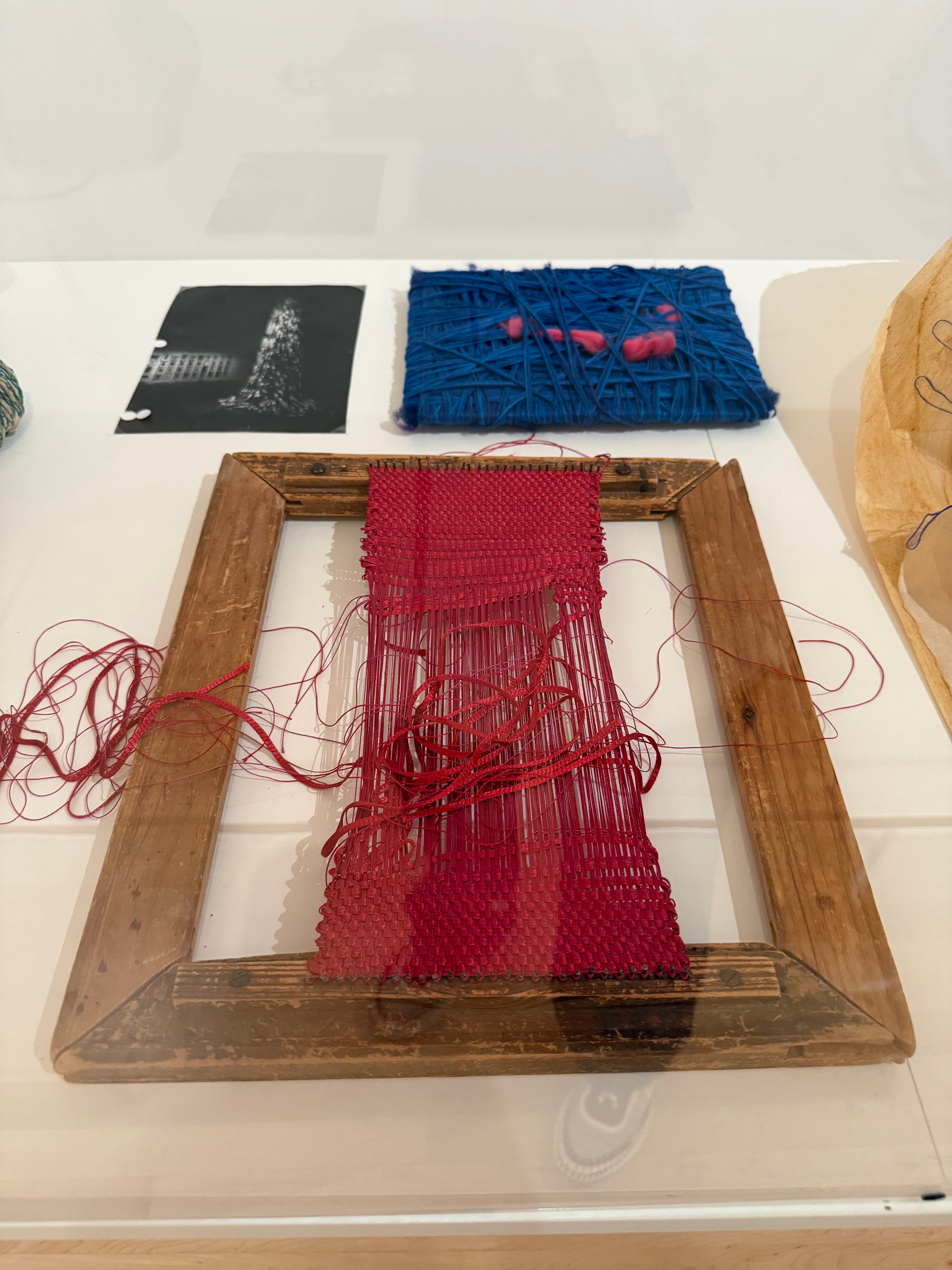
In my forties, I’ve already had plenty of days when the world feels too hopeless to believe in my creative pursuits. The reality of this artist in her nineties creating for nearly seven decades is in and of itself an inspiration. On Youtube, I watch a documentary about Hicks’s life and work. The camera follows the artist crossing a cobblestoned courtyard to her studio in a rust-colored coat. At her desk, she ties off a sample from a wooden frame, her pale, spotted hands moving with purpose. For me, there is no better vision of the future than this tableaux of plants and pink thread.
New Works: Sheila Hicks is on view at SF MOMA until August 9th, 2026.
HERE is a link to “Sheila Hicks: A Little Bit of a Lot of Things.”
Thank you for reading!